Monstera Albo Variegata Large Form english

Monstera Albo Variegata Large Form-english

Monstera Albo Variegata Large Form

Origins, cultivation, and differences from the Small Form
Why this variety remains a cornerstone in the world of rare plants

Par Carolinedemonstera

This chronicle is not a quick buying guide.
It is written for those who take the time to observe the living world.

Why does this variety remain an essential reference in the world of rare plants?

Since I entered the world of rare plants through the gateway of the Monstera Variegata Borsigiana Small Form in 2020 — like many of you — one variety gradually imposed itself on me as an obvious choice, almost as an initiatory passage:

It is essential.
Not because it is fashionable — trends fade —
but because it concentrates, within a single plant, everything that makes the world of plant collecting so singular, so beautiful, and so complex.

1. A raw beauty, almost primordial

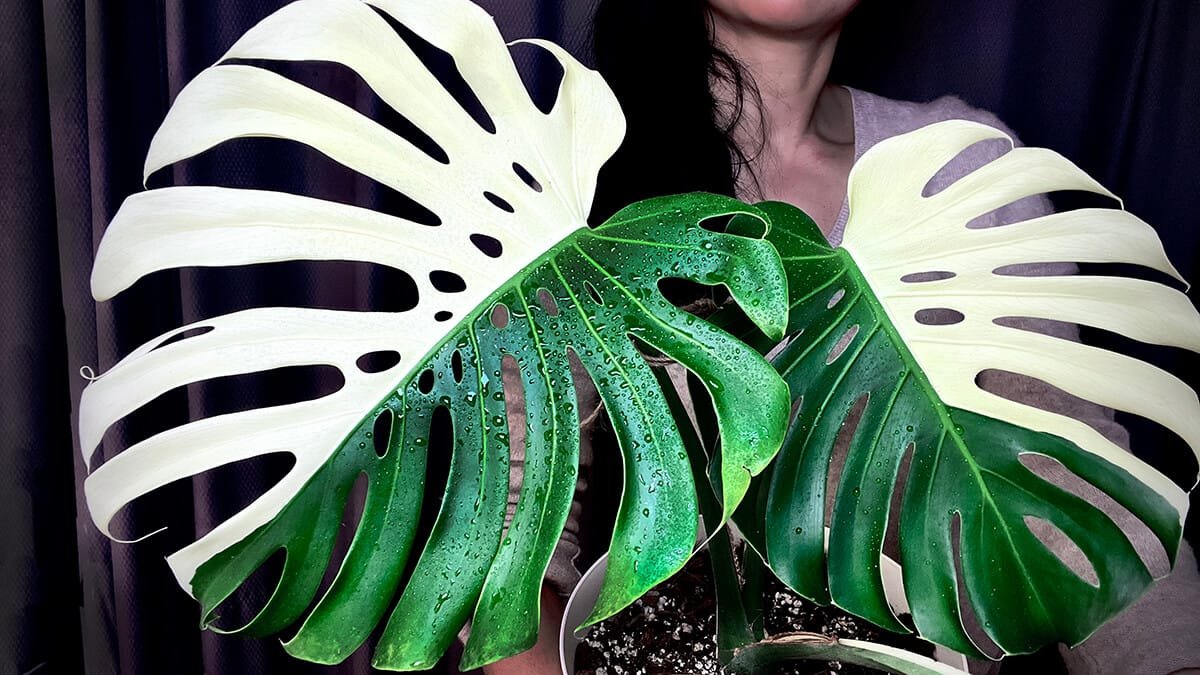
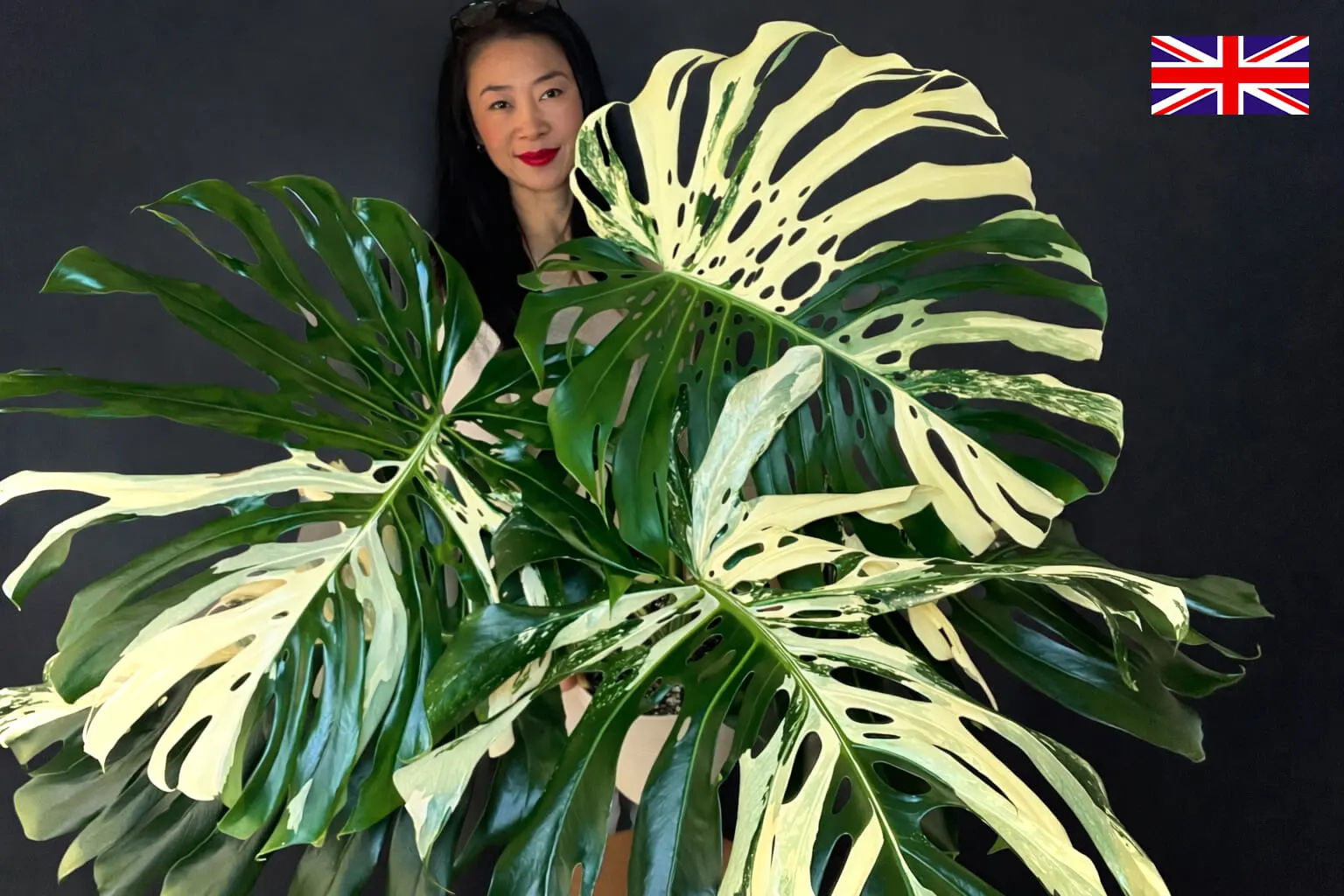
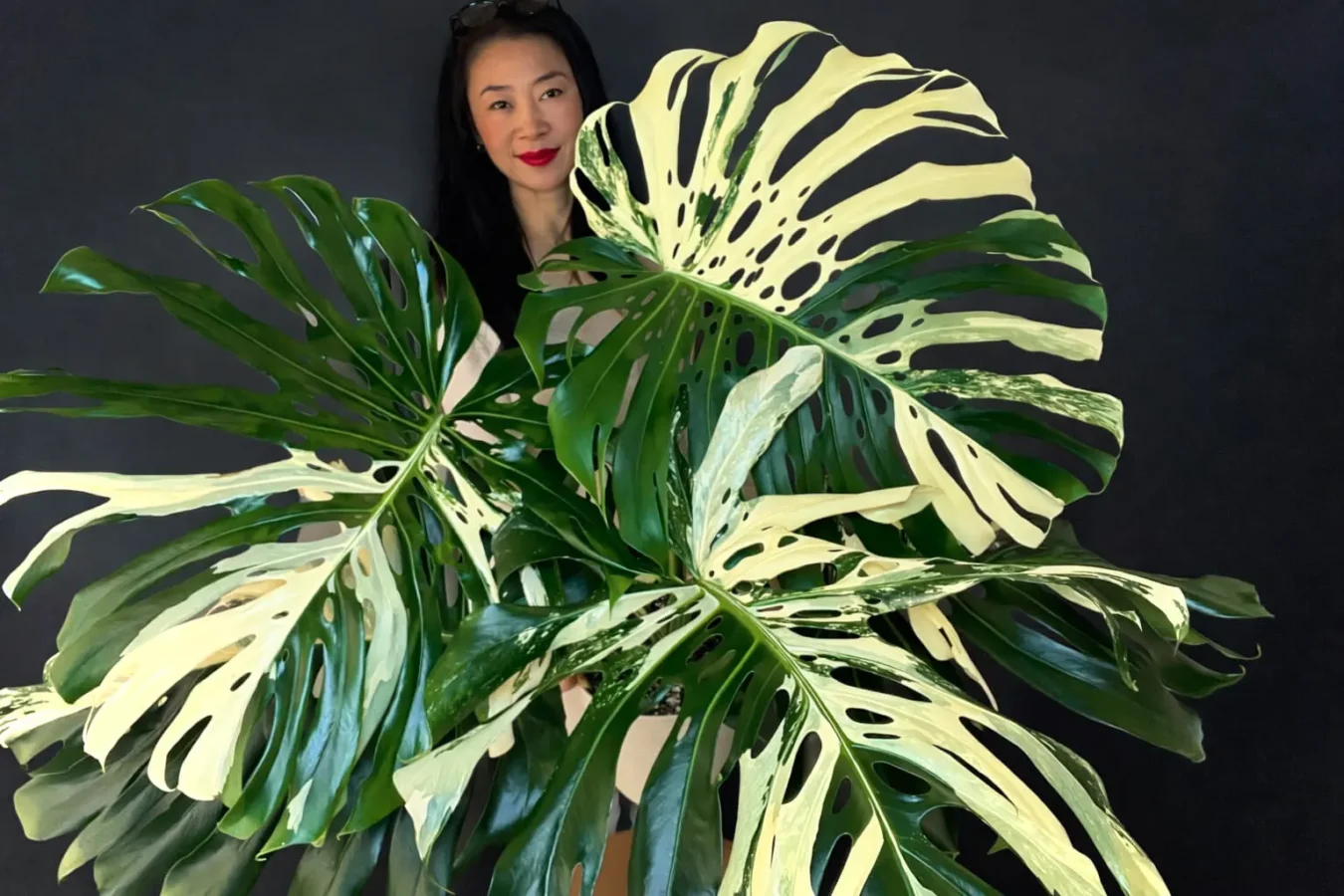
The Monstera Albo Variegata Large Form first fascinates through its powerful, highly contrasted aesthetic.
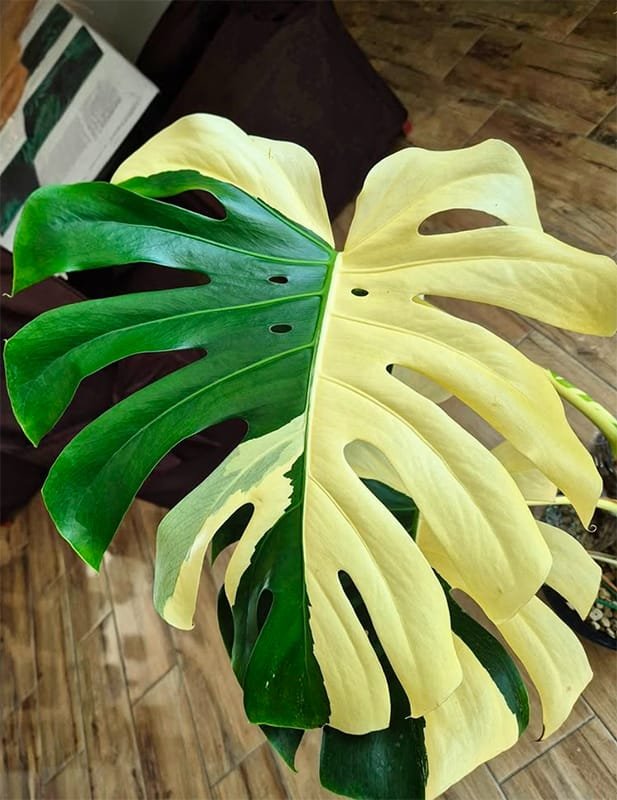
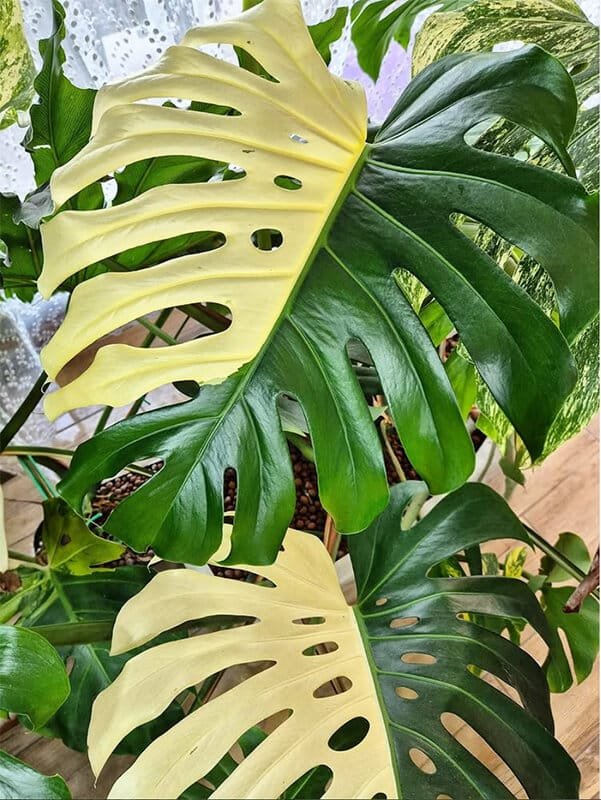
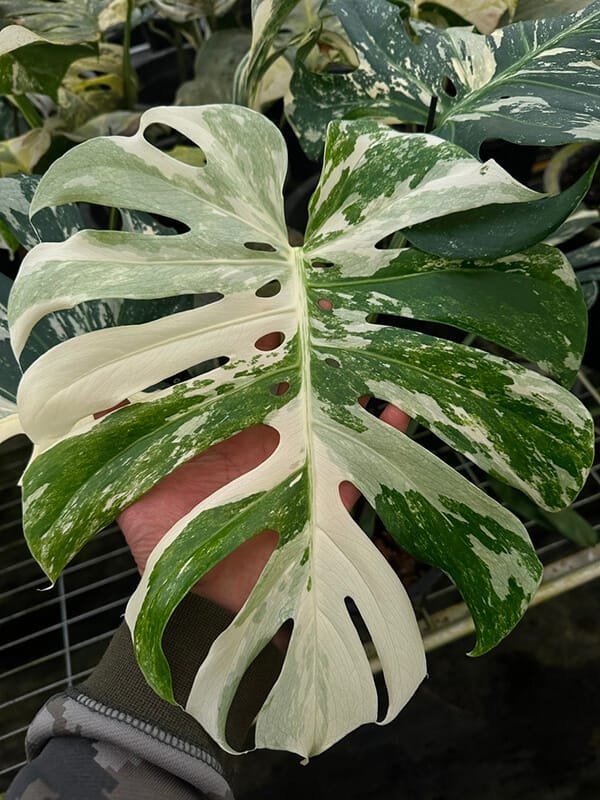
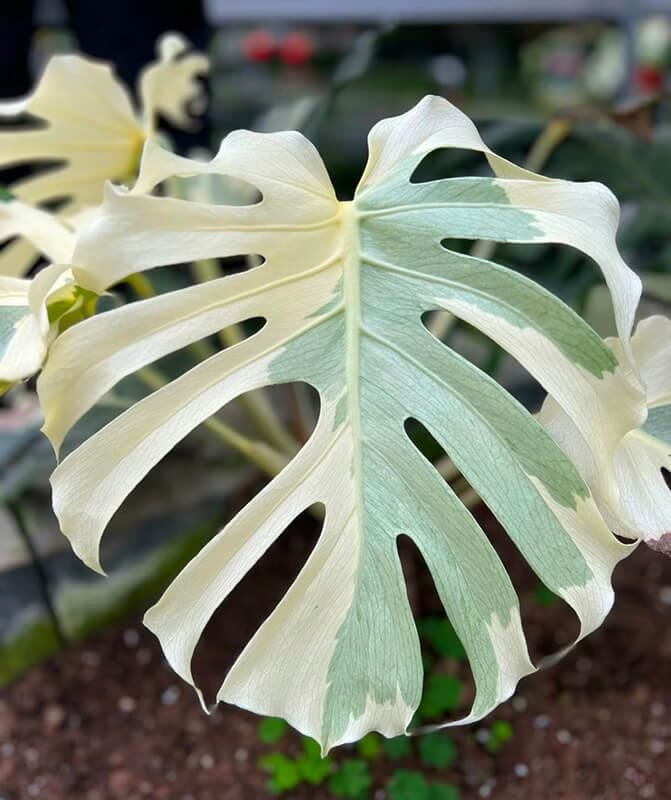
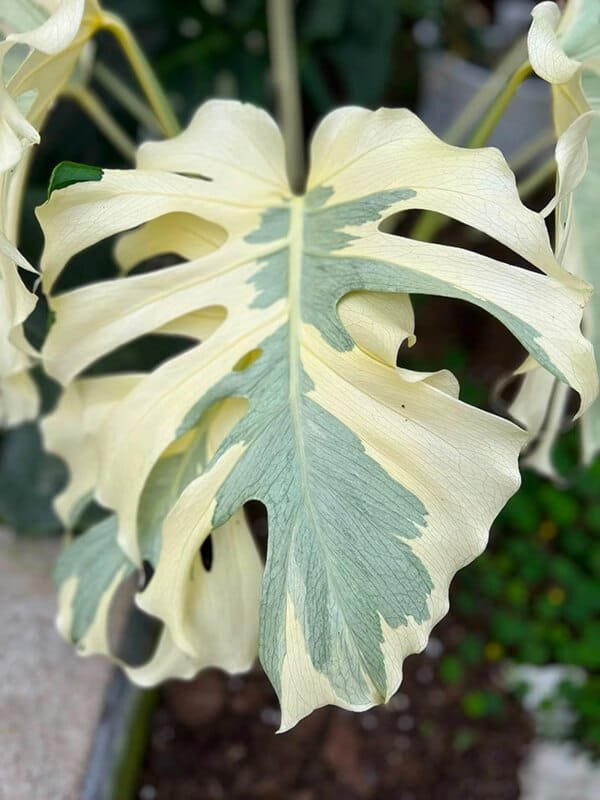
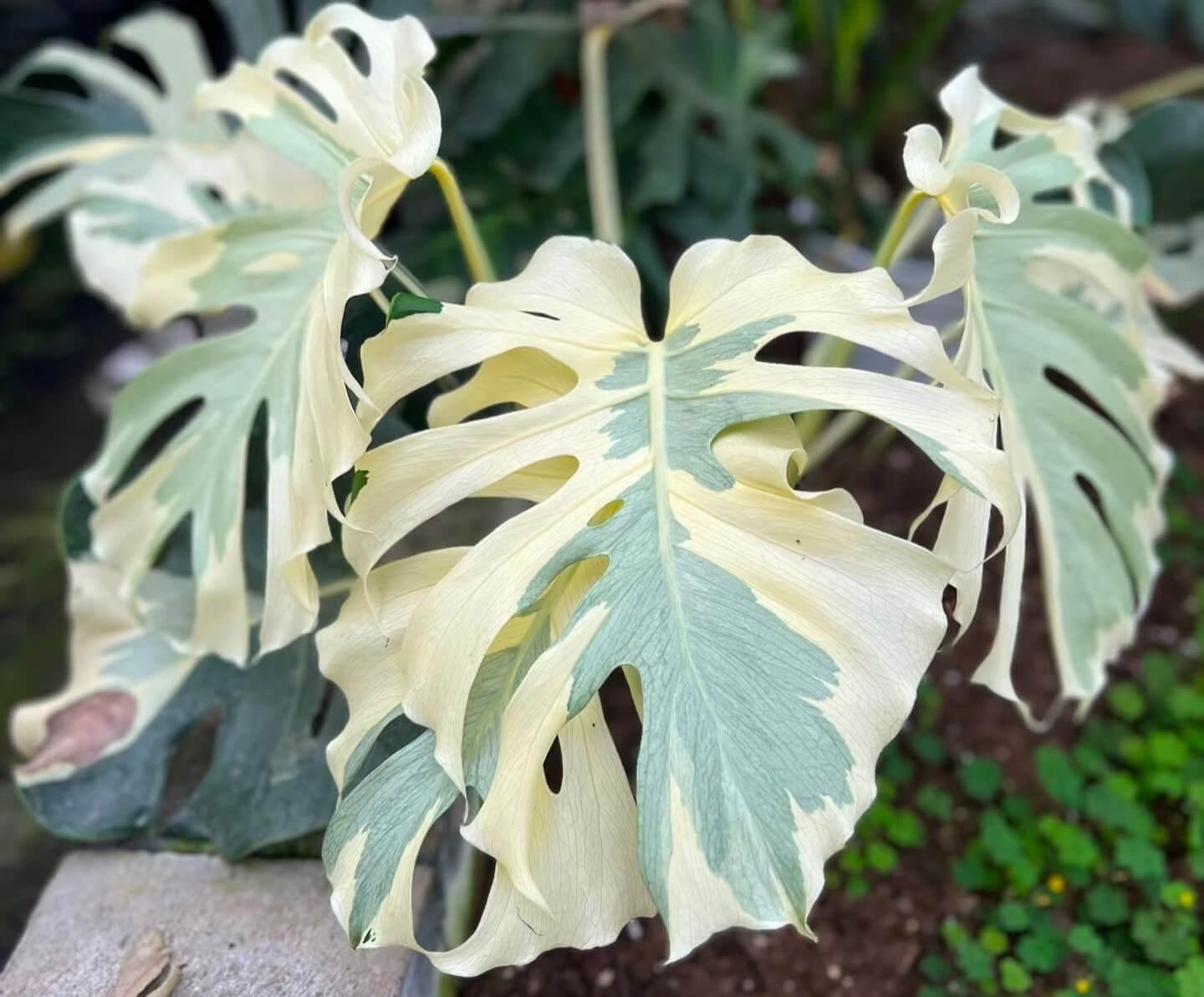
Its leaves are large, thick, deeply fenestrated, carrying a white variegation that is often sectorial or panached, never fully predictable.

Each leaf is a surprise.
Each plant, a unique piece.

Unlike more graphic or irregular varieties, the Large Form imposes a strong vegetal presence, almost sculptural.
It evokes the tropical plant in what it has that is most wild, most ancestral.

2. An origin tied to chance and the moment

Most Monstera Albo Variegata Large Forms originate from spontaneous mutations, appearing within populations of “classic” or “common form” Monstera deliciosa.

Initially, these albinistic forms were often considered “defective” plants — even unhealthy ones.

And yet, this point is fundamental:
this is not a variety intentionally created, but a rare genetic accident, later selected and preserved by humans.

This is also what makes the plant so precious.
It is the product of a moment, of an imbalance, of a fragile biological miracle.

3. A difficult and demanding propagation

It took me much longer to find my first Albo Large Form.

Not only because it was — and still is — rarer, but also because truly beautiful specimens were already difficult to find at the time.

I clearly remember a large mother plant offered by a French seller, priced at €2,000.
I did not buy it.
Not only because the price was beyond my budget at the time, but above all because the plant showed a major imbalance:
one side entirely green, the other turning full moon within only a few leaves.

It was not ideal as a propagation mother plant.

Shortly afterward, this plant was cut.
Among the few pots resulting from these cuttings, my friend Jean was able to purchase a small one with acceptable variegation.
On my side, I recovered two leaf cuttings, which became my first mother plants.

Photo @carolinedemonstera

With a lot of luck, both produced “correct” plants.

But across all the cuttings obtained, only one third was usable for cultivation and sale.
The other two thirds produced either fully green or fully white shoots.

This is typical of Monstera Albo Large Forms originating from instantaneous mutations, often with sectorial variegation.

Later on, I turned toward the search for more heavily panached Albo Large Forms — even rarer — in order to increase the chances of success during propagation.

4. Why it is so highly respected

If the Monstera Albo Variegata Large Form is so respected, it is also because of its difficulty of propagation.
Its variegation is neither always stable nor evenly distributed, unlike some panached Small Forms:

• too much white, and the plant exhausts itself;

• too much green, and the variegation can quickly disappear;

• a poorly positioned node (eye, growth point) that is entirely white or entirely green, and the cutting becomes unusable.

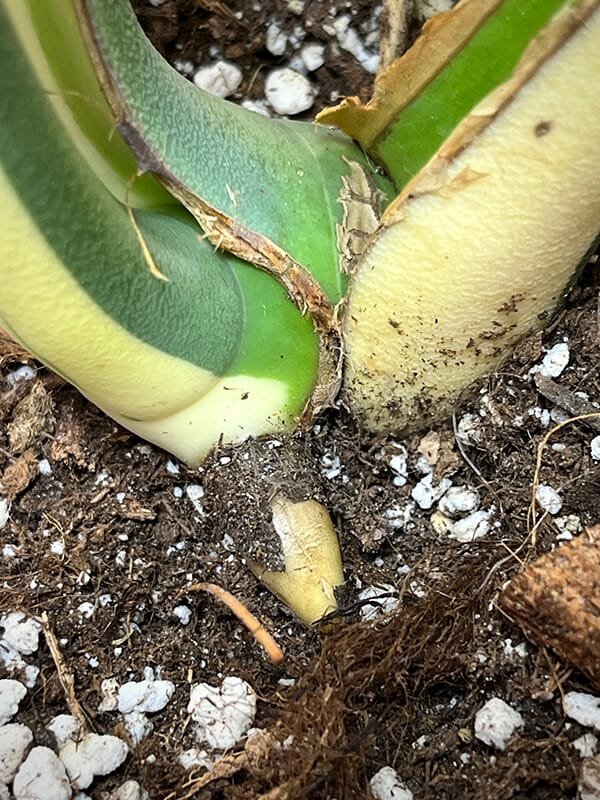
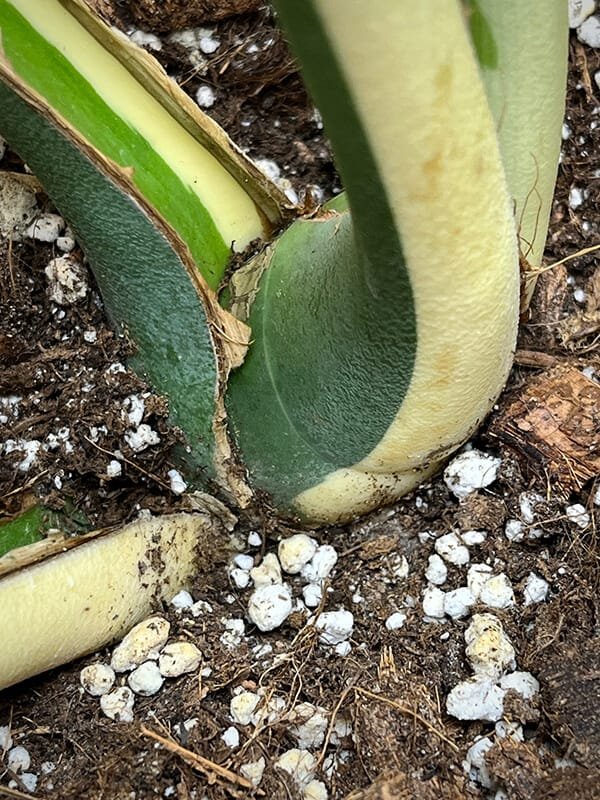
Photo @carolinedemonstera

Very closely spaced internodes make propagation more difficult

Obtaining a pot that develops harmoniously over time requires:
rigorous selection,


• a fine understanding of the plant,

• a great deal of patience and experience.


This is a variety that does not forgive approximation.
A trustworthy seller is therefore strongly recommended.

5. A variety still absent from Tissue Culture (TC)

I am almost certain that many laboratories have attempted to reproduce it through tissue culture.
But the outcome seems clear:

• either a viability too low relative to production costs,

• or an inability to obtain truly stable genetics.

And honestly: all the better.

6. Essential buying advice

  1. If you purchase a leaf cutting, you must imperatively verify the position and variegation of the growth point. Ideally, request a photo of the mother plant with the sold leaf still visible on it. I have seen far too many false “mother plants” used as sales photos. The safest option remains the purchase of a pot with an already emerged shoot, showing an overall variegation of less than 50% white, in order to ensure functional photosynthesis and sustainable growth..
  2. Beware of confusion:
some mature-looking Monstera Albo Variegata Small Forms are sold as “Large Form” or “Big Form”.

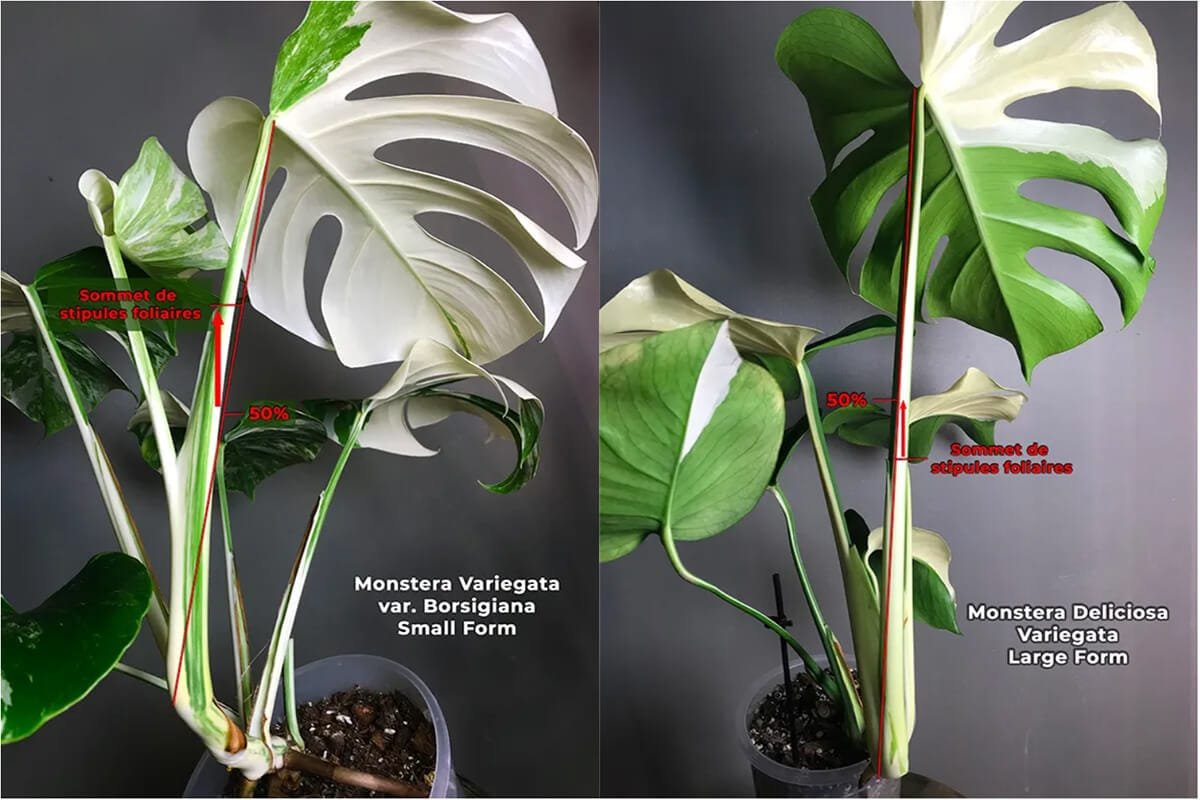
7. La Monstera Albo Large Form vs Small Form :

Criteria Large Form Small Form (Monstera borsigiana)
Botanical status Form of Monstera deliciosa Form of Monstera deliciosa (often called borsigiana)
Internodes Short, compact Short, more spaced
Stem thickness Thikck, robust Thinner
Petioles Thick, often rigid, “more mature” Thinner, smoother
Mature leaf size Very large, wide, thick Smaller, thinner
Leaf texture Fleshy, dense More supple
Fenestrations Deep, wide, structured Appear faster but sometimes less pronounced
Growth speed Slow to moderate Fast
Ovrall structure Compact, massive, built Slender, climbing
Variegation (Albo) Often sectorial, sometimes panached, unstable More often panached, more regular
Propagation difficulty (Albo) High More accessible
Stability in cultivation Demanding, requires experience More tolerant
Market availability Rare More common
Average price Higher More accessible

Photo @carolinedemonstera

To go deeper into the morphological differences between a Monstera Deliciosa Large Form and a Monstera Borsigiana Small Form, you can read my dedicated article here:


👉 https://passionplants.fr/comment-distinguer-une-monstera-deliciosa-large-form-d-une-monstera-borsigiana-small-form/

8. Growing conditions

To obtain spectacular mature leaves, optimized indoor growing conditions are required.
For optimal growth:

  1. Ideal temperature: 20–35°C (68–95°F)

  2. Ideal humidity: 50%+
  3. Bright light without direct sun (or a guaranteed 12-hour photoperiod under grow lights). Under grow lights: 5000+ lux, 150–300 PPFD
$
  4.  A very airy substrate specific to aroids, composed of indoor plant soil, perlite (or pumice), composted pine bark (or coconut chips), to avoid root rot. Supplemented with vermicompost, slow-release fertilizer, or a reasonably balanced liquid fertilizer.

  5. Permanent air circulation to encourage transpiration, substrate drying, and to prevent fungal diseases.

These parameters are not absolute rules, but balances to be adjusted by observing the plant.

9. Variations within the Monstera Albo Large Form

(a key point often overlooked)
Not all Monstera Albo Variegata Large Forms look alike.
Beyond size and vigor, several expressions of variegation exist, originating from spontaneous mutations, which strongly influence stability, cultivation, and value.

1.Sectorial Monstera Albo Large Form

Photo Karol @monsterare

Photos Karol @monsterare

Clearly defined areas of Albo (or cream) and very dark green.
These leaves are both temperamental and highly assertive.


They often seem to say:
“If I am not white, then I am green.”


This expression is spectacular, but also one of the riskiest in propagation: growth points often turn out entirely green or entirely white.

2. Monstera Albo Large Form with partial mint variations

Often originating from seedlings or unstable spontaneous mutations, especially in juvenile phases.
Areas meant to be Albo may display:

  • mint tones,

  • subtle intermediate mint nuances.

Monstera Albo Large Form issue de semis muté

PhotDes traces de mint partielles

Like all variegated Monsteras originating from natural mutation, these plants are often hesitant, somewhere between:
“Am I Albo… or Mint?”

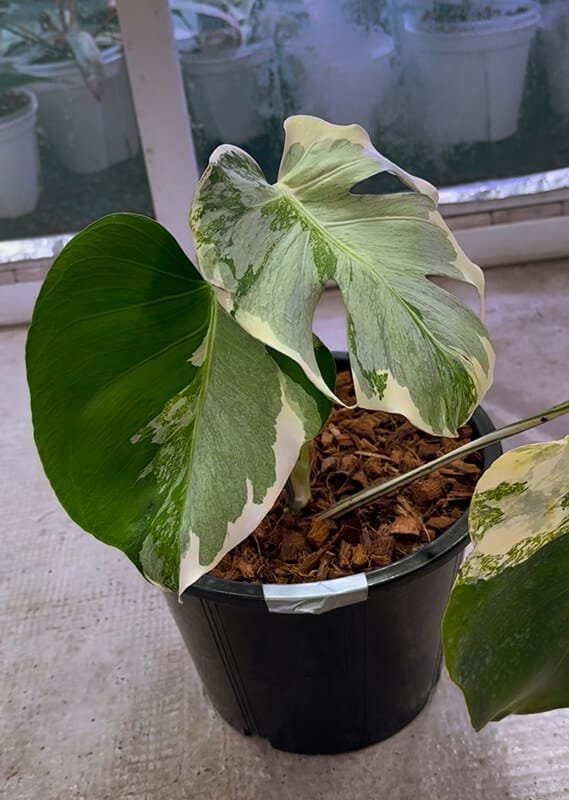
3. Panached Monstera Albo Large Form

• Non-marble panached

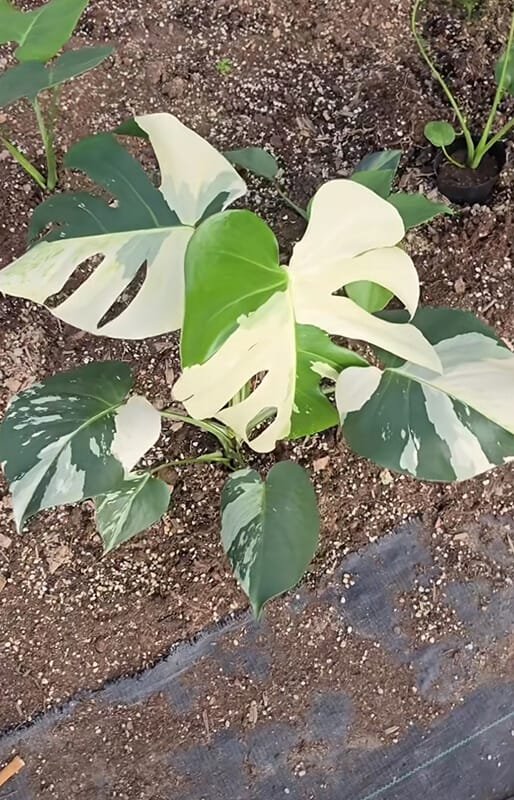
White (or cream) and green are distributed relatively evenly, without optical blending, remaining clearly distinct.
This expression is often more stable, more readable, and more viable in the long term.

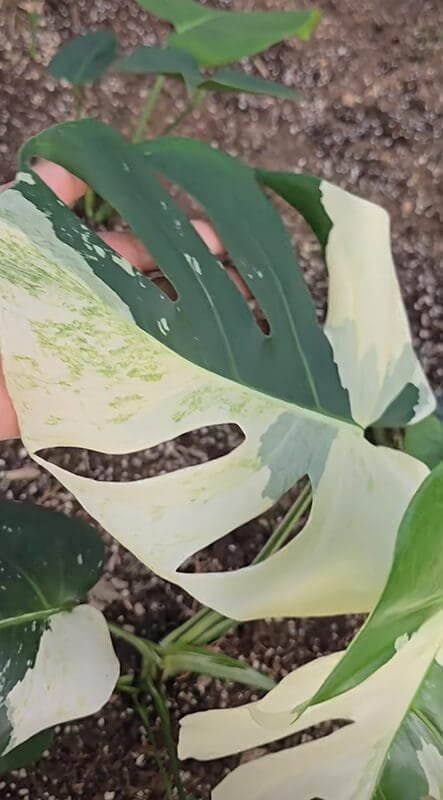
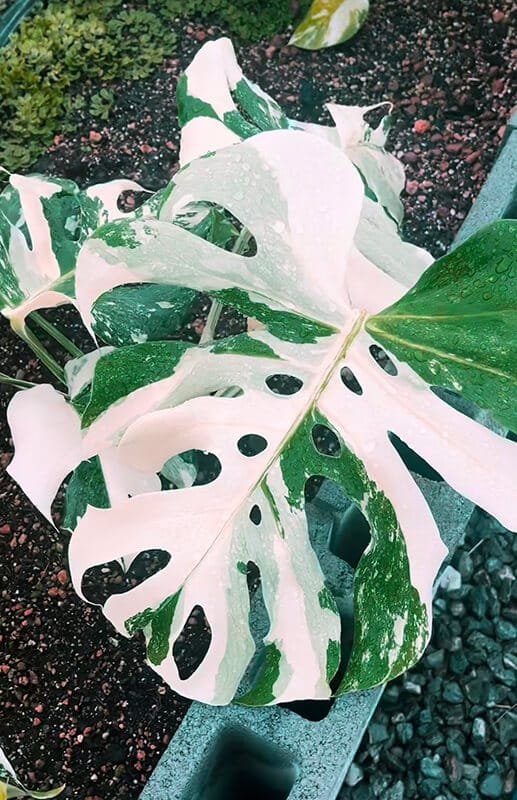
• Marble panached — “Yakuza” type (often referred to as Monstera Albo Variegata Yakuza / Indo type)

Here, the green areas themselves are marbled or variegated.
Superposition between leaf tissue layers can create complex visual effects, sometimes resembling a mint appearance.

This is only an optical effect, resulting from the superposition of a palisade mesophyll layer lacking chloroplasts over a spongy mesophyll layer, and not from a true mint variegation.

This phenomenon is similar to what is observed in many marbled Albo Small Form (Monstera Deliciosa var. Borsigiana) specimens.

MonsteraMonstera Albo Large Form Yakuza

Monstera Albo Large Form Yakuza

In this specific case, “mint” is a visual illusion, not a genetic mint variegation.


Personally, I consider this form to be the result of cultural selection from Albo Large Form, rather than an autonomous mutation.

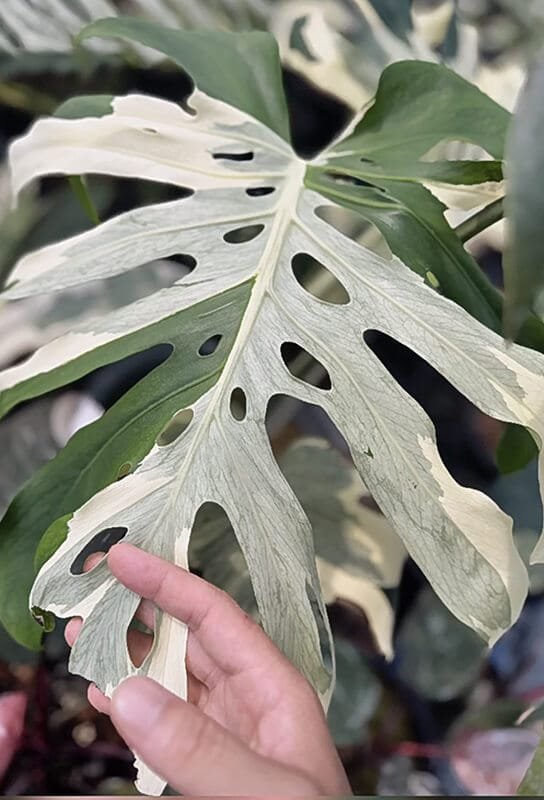
4. Chinese Masterpiece et Lava Masterpiece

Monstera Chinese Masterpiece

Monstera Chinese Masterpiece

Monstera Chinese Lava Masterpiece

Monstera Chinese Lava Masterpiece

What a special pattern — just wow!

Monstera Chinese Lava Masterpiece – Collection @钰涵园艺

Some of these plants mark a turning point.

We are no longer speaking only about variegation, but about cultivation, gaze, and narrative.
Another specific chronicle on “Monstera Masterpieces” will follow soon.

Final thoughts: a plant that says something about us

The Monstera Albo Variegata Large Form is not a plant of instant gratification.
It demands time, selection, observation, and humility.
It attracts those who are not merely seeking to own a rare plant, but to build a relationship with it.
For me, it embodies what responsible collecting should be:

• less quantity,

• more care,

• more respect for the living world.

For all these reasons, it naturally opens this first Plant Chronicle on rare varieties — 2026.

Caroline Demonstera

Laisser un commentaire

Votre adresse email ne sera pas publiée. Les champs obligatoires sont marqués *